
Why Is My Balcony Leaking Into the Garage Below?
A stain or drip on your garage ceiling after rain often starts at the balcony above. Learn why it happens, how to confirm the source and what a proper repair involves.

You walk into the garage after a storm and find drips on the car, a brown stain spreading across the ceiling or white, crusty deposits forming on the concrete overhead. If there’s a balcony above, it’s the first suspect, and it’s usually the right one.
Many Sydney houses, townhouses and apartment blocks have a garage directly under a balcony. Because garage ceilings are often bare concrete or plain plasterboard, with no insulation or finishes to hide moisture, the garage is often where a balcony leak shows up first.
Free balcony leak inspection
Water Dripping Into Your Garage After Rain?
Sydney One Waterproofing offers free balcony leak inspections to find where the water is getting in. Get a professional assessment before the damage spreads.
Why Garages Show Balcony Leaks First
A balcony over a bedroom usually has a plasterboard ceiling, insulation and paint between the slab and the room. A garage often has none of that, so water that gets through the balcony slab appears quickly as a drip, a stain or mineral deposits.
Water also travels. It follows cracks, construction joints and anything that passes through the slab, such as light conduits, downpipes and pipe penetrations. That’s why the drip in your garage may not sit directly under the spot where water is getting in on the balcony.
Garages are also rooms people don’t spend much time in. A slow balcony leak can go unnoticed for months, so it’s worth checking the ceiling after heavy rain.
Common Causes of a Balcony Leaking Into the Garage
There is often more than one cause at once, which is why a proper inspection matters before any repair.
Failed or Damaged Waterproofing Membrane
The membrane is the waterproof layer under your tile bed. Sun, heat, movement and age wear it down, and some balconies were built with a membrane that was too thin, the wrong type, or damaged by other trades before tiling. Once it cracks or lets go of the slab, every downpour pushes more water into the concrete.
Door Sills and Wall Junctions
The edges are where most balcony leaks start. AS 4654, the Australian Standard for waterproofing outdoor areas above ground, sets out how the membrane should be turned up the walls and finished at door sills. Where the upturn is too short, missing or has split, water gets behind the tiles and runs down into the slab.
Floor Wastes and Drain Outlets
The membrane must be properly bonded into the balcony drain. If that connection fails, water running to the drain goes around it instead of down it. A blocked drain, or a balcony with no overflow, lets water build up and find the weakest point.
Poor Falls and Ponding Water
A balcony should slope towards its drain. Puddles that sit for hours after rain mean the falls are wrong, and water left sitting on a balcony will eventually find its way through.
Balustrade Posts and Other Penetrations
Balustrade posts, light fittings and anything else fixed through the tiles create holes in the waterproofing. If they weren’t sealed to the membrane, water travels down the fixing into the slab. Rust stains around posts are a common sign.
Cracked Tiles, Grout and Concrete
Cracked grout and loose tiles let more water reach the membrane. Cracks in the slab itself, often from movement or rusting steel, give it a direct path into the garage.
Planter Boxes on the Balcony
Wet soil keeps the surface damp around the clock. A planter box without its own waterproofing can leak slowly but constantly, even in dry weeks, especially when the plants are watered often.
Is It the Balcony? How to Narrow Down the Source
When the water appears is the best clue you have:
- Only during or after rain: likely the balcony, roof, an external wall or a window.
- After showers, baths or the washing machine: likely a bathroom or laundry above the garage.
- All the time, even in dry weather: possibly a pressurised water pipe. Call a licensed plumber.
- After hosing the balcony or watering pots: likely the balcony surface, drain or a planter box.
A few things you can do before an inspection:
- Photograph the stain and the balcony, with dates, after each rain event.
- Mark the edge of the stain lightly in pencil to see whether it’s spreading.
- Clear leaves and debris from the balcony drain.
- Note whether it gets worse in wind-driven rain from one direction.
Avoid flooding the balcony yourself to test it. If the membrane has already failed, you’ll push more water into the slab and the garage. A controlled water test is part of a professional balcony leak detection, carried out once the likely entry points have been checked.
Warning Signs in Your Garage
- Brown or yellow water stains on the ceiling
- White, crusty deposits, or small icicle-like formations on the concrete (efflorescence, caused by water carrying lime out of the slab)
- Rust stains, flaking concrete, or exposed steel
- Bubbling paint, or soft or sagging plasterboard
- Drips on the car or puddles on the floor after rain
- A musty smell or mould on stored items
Safety first: if water is coming through or near a light fitting or power point, switch that circuit off at the switchboard and call a licensed electrician before anything else.
Why You Shouldn’t Wait to Fix a Leaking Balcony
The biggest risk is to the slab itself. Concrete balconies have steel reinforcement inside them. When water keeps reaching that steel, it rusts and expands, cracking the concrete around it. This is often called concrete cancer, and once it starts, the repair can move from waterproofing to structural concrete work that may need an engineer.
A balcony leaking into the garage can also damage cars, stored items and electrical fittings, bring down a plasterboard ceiling and, in strata buildings, turn into a dispute between neighbours. In most cases, the earlier the leak is found, the smaller and cheaper the repair.
How Balcony Leak Repair Works
There’s no single fix for every leaking balcony. The right repair depends on what the inspection finds.
Reseal, Repair or Re-Waterproof?
- Maintenance: regrouting, new perimeter sealant, or a clear sealer can slow water getting in, but only where the membrane underneath is still sound. You can read more about when you can fix a leaking balcony without removing tiles.
- Targeted repair: where the leak comes from one spot, such as the drain outlet, door sill or a balustrade post, that area can sometimes be repaired on its own.
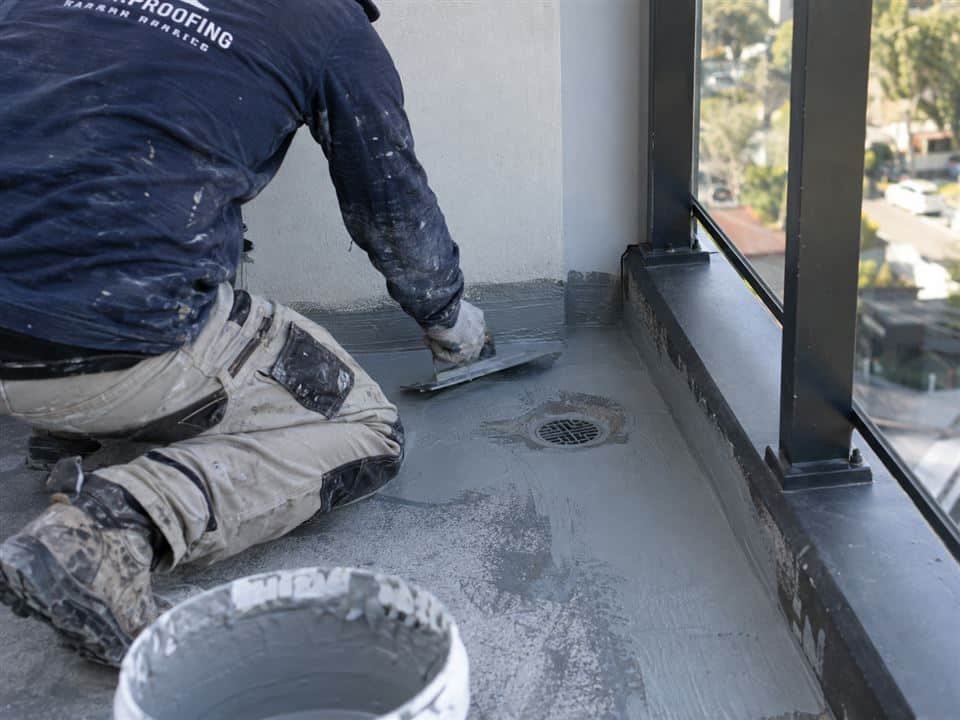
- Full re-waterproofing: where the membrane has failed, the tiles and bed come up, the slab is repaired, the falls are corrected, and a new membrane goes down before retiling. This is the lasting fix for a failed membrane.
Our Balcony Leak Repair Process
- Inspect the garage ceiling and the balcony above, including the drain, door sill, edges, posts, and any planter boxes.
- Take moisture readings and run controlled water tests to confirm where water is getting in.
- Confirm whether the cause is the balcony, plumbing or another part of the building, referring plumbing faults to a licensed plumber.
- Give you a written quote that sets out exactly what’s included.
- Remove failed tiles, bedding and coatings where needed, and repair cracks and the concrete surface.
- Reinforce the corners, wall edges, door sill, drain and post fixings.
- Apply a flexible, UV-resistant membrane to AS 4654, then cure and water test it before tiling.
- Hand over your compliance certificate and 10-year written workmanship warranty.
Once the leak is stopped, the garage ceiling needs time to dry before it’s patched and painted. If the inspection finds rusting steel or spalling concrete, we’ll tell you so you can get the right structural advice.
For the full service, see our balcony leak repair page.
Balcony Leaks Into Garages in Apartments and Strata Buildings
In apartment blocks, balconies often sit over the basement car park or another owner’s garage, so one leak can affect several people.
Report it to your strata manager in writing as soon as you notice it, with dated photos of the garage ceiling and the balcony. In NSW strata schemes, the owners corporation is generally responsible for common property, and balcony slabs and membranes are often common property. Responsibility still depends on the strata plan, the by-laws and any approved renovations, such as an owner retiling their own balcony, so confirm who is responsible before work starts.
We work directly with strata managers and owners corporations. Find out more about our strata waterproofing services.
What Affects the Cost of Balcony Leak Repair in Sydney
- Where the leak is coming from and how far the water has spread
- Whether the fix is maintenance, a targeted repair or full re-waterproofing
- Whether tiles, bedding or old coatings need removing
- The condition of the slab, and any crack or concrete repairs
- The size and surface of the balcony (tiled, concrete or timber)
- Drainage and fall corrections
- Access, height and strata requirements
Every balcony is different, so we don’t guess over the phone. We inspect first, then give you a clear written price.
Why Sydney Homeowners Call Sydney One Waterproofing
- Licensed and insured: NSW licensed waterproofing contractor (Licence 504073C).
- Done to the standard: all balcony membrane work follows AS 4654.
- Backed in writing: a 10-year written workmanship warranty, the manufacturer’s product warranty, and a compliance certificate on completion.
- Fast and upfront: $0 call-out fee, on-site within 24 hours of your enquiry, and a written quote within one business day.
Our workmanship warranty covers the work we carry out. It doesn’t cover existing building defects, plumbing faults, or unrelated damage.
We’re based in Fairfield East and provide balcony waterproofing and leak repairs across Sydney.
Balcony Leaking Into Garage FAQs
If there’s a balcony above, the most likely cause is water getting past the tiles and through a failed membrane, door sill, drain or post fixing into the slab. A roof, wall, window or gutter can also be responsible, so the source should be confirmed before repairs.
Yes. Water that keeps reaching the steel inside the slab causes it to rust and expand, cracking the concrete. Rust stains or flaking concrete on the garage ceiling are signs to act quickly.
Sometimes. If the membrane is sound and the leak comes from grout, sealant or one junction, a targeted repair may work. If the membrane has failed, the tiles usually need to come up for a lasting fix.
Balcony leak detection starts with a visual check of the balcony and the garage below, then moisture readings and controlled water tests on the likely entry points, such as the drain, door sill and posts.
It depends on the strata plan, by-laws and any past renovations. The owners corporation is generally responsible for common property, which often includes the balcony slab and membrane. Report it to your strata manager in writing.
It depends on the cause, how far the damage has spread, whether tiles need to come up, and the size of the balcony. We inspect for free and give you a written quote.
Most balcony waterproofing takes one to two days on site, plus 24 to 48 hours for the membrane to cure before tiling. Balconies that need concrete or drainage repairs first take longer.
