
Can You Fix a Leaking Balcony Without Removing Tiles?
Sometimes. Learn when resealing and over-tile systems can work, when they can't, and the signs your balcony membrane has failed.

A water stain on the ceiling under your balcony is never a welcome sight, and one of the first things most owners want to know is whether the tiles have to come up. The honest answer is that sometimes they don’t. A leaking balcony can occasionally be treated without removing tiles, but the right solution depends on where the water is getting in and the condition of the waterproofing membrane underneath.
In this guide, our balcony waterproofing Sydney team explains the repair options, what each one can and can’t do, and when a full repair is the only fix that will last. It’s written for homeowners, apartment owners, landlords and strata managers dealing with cracked grout, damp ceilings or moisture damage below a balcony.
Why Tiled Balconies Leak
Tiles and grout are not waterproof. On a properly built balcony, the job of keeping water out belongs to a membrane hidden under the tile bed. The tiles are simply the wearing surface. When a balcony leaks, it’s usually because water has found a way past or through that membrane.
The most common causes we find are:
- Failed membranes: Age, building movement and years of heating and cooling break membranes down over time. A membrane applied too thin, or not left to cure properly, can fail much sooner.
- Cracked or missing grout: Damaged grout lets water under the tiles every time it rains. If the membrane is sound this isn’t a leak on its own, but it keeps the tile bed wet and puts constant pressure on any weak spot.
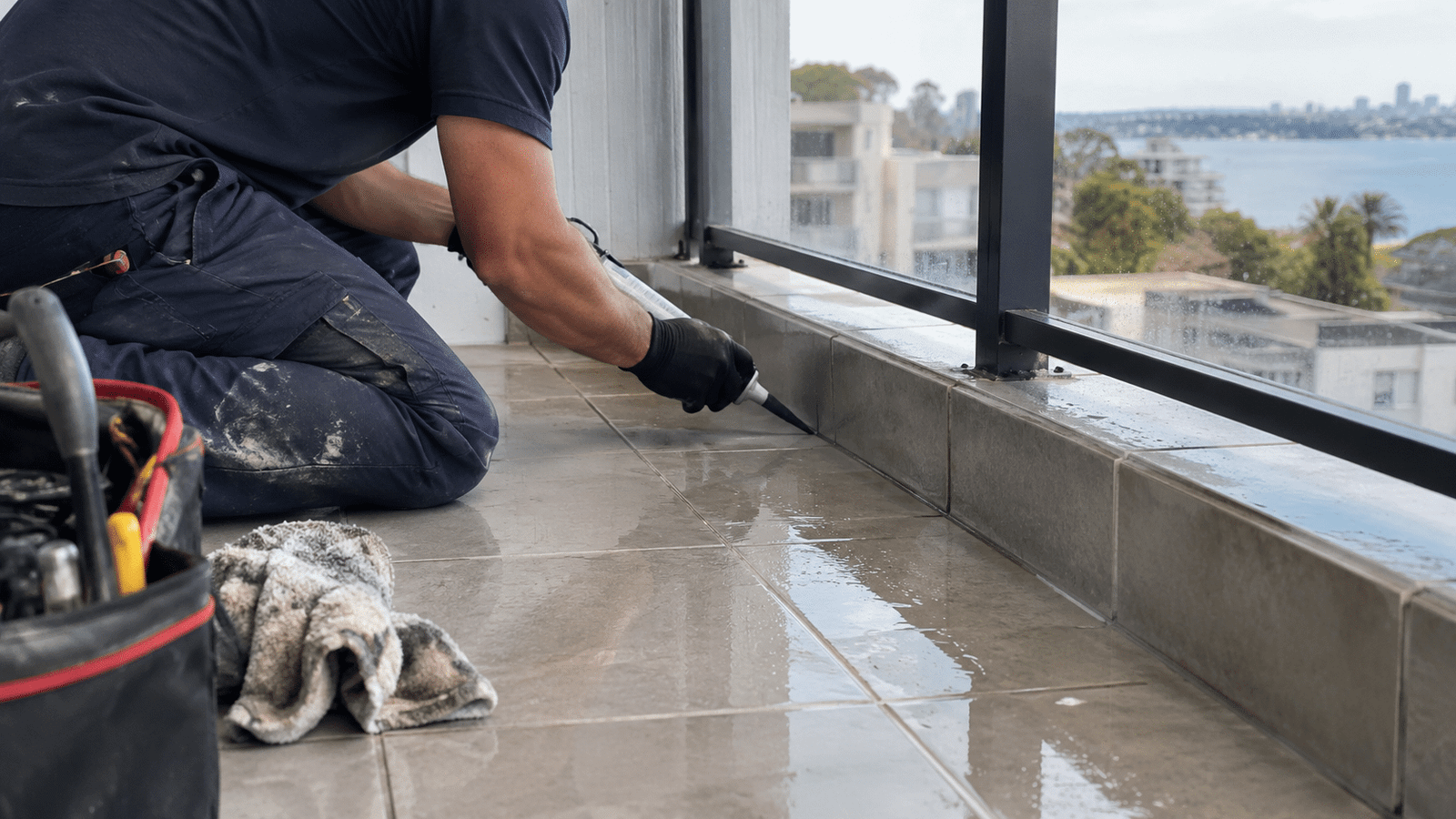
- Deteriorated sealant: The flexible sealant around the edges, door sill and junctions shrinks and cracks in strong sun, opening a direct path for water.
- Damaged drainage outlets: The membrane must be properly bonded into the floor waste. If that connection fails or was never made, water tracks down the outside of the pipe and into the slab.
- Poorly sealed wall junctions: Movement is concentrated where the floor meets a wall, door frame or balustrade post. Poor detailing in these spots is behind a large share of balcony leaks.
- Incorrect falls: If the floor doesn’t slope towards the drain, water sits on the surface after rain and slowly works its way in.
Is Waterproofing Over Existing Tiles Possible?
Yes, in some cases. Some coating and membrane systems are designed to go over existing tiles, and on the right balcony they can be a sensible option. But waterproofing without removing tiles only works when several conditions line up.
Tile Adhesion
Any system applied over tiles is only as good as the bond between those tiles and the slab. Loose or drummy (hollow-sounding) tiles move under foot traffic and temperature changes, and that movement cracks whatever sits on top.
Surface Preparation
Glazed tiles are smooth and often carry old sealers, grime or coatings. They need thorough cleaning and preparation exactly as the product maker specifies. Failed grout and sealant usually have to be cut out and replaced first.
Drainage and Floor Levels
A coating can’t fix a balcony with the wrong slope, and it can’t repair a poor connection at the drain. Adding layers also raises the floor slightly, which can affect the step at the door and how water reaches the outlet.
Compatible Coating Systems
The system must be approved by its manufacturer for outdoor use over existing tiles. Incompatible products can peel or blister and may void the product warranty.
Professional Assessment
Good tiled balcony waterproofing starts with an on-site check of the tiles, the drain, the falls and exactly where the water is getting in. Whether an over-tile system suits your balcony can only be decided once that’s done.
Temporary Maintenance vs a Full Waterproofing Repair
It helps to understand the difference between maintenance that slows water down and a repair that actually fixes the membrane.
Slows water down
Maintenance Measures
Regrouting, replacing perimeter sealant and applying a clear penetrating sealer to tiles and grout all reduce how much water gets under the tiles. They’re useful when the membrane underneath is still sound, or as a short-term measure while a bigger repair is planned. Like any surface treatment, they need checking and reapplying over time.
Fixes the membrane
A Comprehensive Repair
A proper balcony membrane repair deals with the waterproofing layer itself. Depending on the balcony, that might mean a suitable over-tile system or stripping the tiles and installing a new membrane, with the drain, wall junctions and falls corrected along the way.
The key point is this: ordinary grout sealer or a surface coating cannot reliably repair a membrane that has already failed. It may slow the leak, but water that is already under the tiles still has a way through, and the leak usually returns.
When the Tiles Need to Come Up
Tile removal is usually the right call when:
- The membrane underneath has failed, or the leak continues after the joints are resealed
- Tiles are loose, drummy or cracked across a large area
- The screed or substrate is cracked, crumbling or soft
- Water has penetrated the structure, causing rust stains, concrete cancer or damaged timber framing
- The falls are wrong or the drain connection needs to be rebuilt
- Earlier over-tile treatments have already failed
Lifting the tiles lets us see the real condition of the slab, repair it and install a new membrane properly from the base up.
Warning Signs of Balcony Waterproofing Failure
Balcony leaks often stay hidden for months before they show. Watch for:
- Damp patches, stains or mould on the ceiling below
- Peeling or bubbling paint on nearby walls and ceilings
- Efflorescence: white, powdery salt deposits on tiles, grout or the underside of the slab
- Water pooling for hours after rain
- Cracked, crumbling or missing grout
- Rust stains around balustrade posts and fixings
- Tiles that sound hollow when tapped
The earlier a leak is caught, the better the chance that a smaller repair will do the job.
Free balcony inspection
Book a Balcony Inspection With Sydney One Waterproofing
Not every leaking balcony needs the tiles lifted, but every leak needs the right diagnosis. If you’re looking for balcony waterproofing Sydney property owners can rely on, our licensed team will find the source, explain your options clearly and recommend the repair that suits your balcony.
Balcony Waterproofing Sydney: How We Inspect and Repair
Our process is built around finding the real cause first, then fixing it properly. You can read more about our balcony waterproofing Sydney, including the types of balconies and decks we work on.
Leak assessment
We inspect the balcony, drains, junctions and the area below to find where water is getting in, then give you a clear written quote.
Honest recommendation
We explain whether maintenance, an over-tile system or a full re-waterproof suits your balcony, and why.
Substrate preparation
We remove failed materials, clean the surface, fill cracks and repair damaged concrete so the new membrane sits on a solid base.
Detailing the weak spots
We prime and reinforce the corners, drains, door sills and railing posts, which is where most balcony leaks start.
Membrane application
The membrane goes on in layers to the correct thickness, then cures properly before anything goes on top.
Final quality checks
We water test the area before tiling or finishing. Our balcony membrane work is done to AS 4654, the Australian Standard for waterproofing outdoor areas, and comes with a 10-year written workmanship warranty.
Why Professional Balcony Waterproofing Matters in Sydney
Sydney’s weather is hard on balconies. Heavy summer storms and East Coast lows can drop a lot of rain in a short time, while strong UV and daily heat cycles slowly dry out sealants and coatings. Near the coast, salty air adds to the wear on fixings and exposed surfaces.
Apartments add another layer of complexity. A leaking balcony in a strata building can affect the unit below and common areas, and in many NSW strata schemes the membrane is treated as common property. It’s worth speaking with your strata manager or owners corporation early. We work with strata managers on single units and whole buildings, and you can learn more on our strata waterproofing page.
Professional balcony leak repair helps to:
- Protect the structure by keeping water away from steel reinforcement and timber framing
- Reduce recurring repairs by fixing the cause rather than treating the symptoms
- Address moisture damage such as stained ceilings, mould and damaged finishes below
- Provide documentation, including a compliance certificate, that’s useful for strata records, sales and leasing
What Affects the Cost of Balcony Waterproofing?
Every balcony is different, so we don’t quote prices without seeing it first. The main factors are:
- Size of the balcony or deck
- Type of repair Maintenance, an over-tile system, or a full strip and re-waterproof
- Tile removal and disposal If the existing tiles have to come up
- Damage underneath Such as cracked screed, concrete cancer or rotten timber
- Drainage and falls That need correcting
- Membrane system and finish That suit the surface and its sun exposure
- Access Including upper floors, tight spaces and strata building access
- Retiling or new finishes Once the waterproofing is complete
We inspect first and give you a written quote before any work starts, with no call-out fee.
Frequently Asked Questions
Sometimes. If the membrane is still sound and the leak is coming from grout, sealant or a junction, resealing or a suitable over-tile system may solve it. If the membrane underneath has failed, the tiles usually need to come up for a lasting repair.
It depends on the system, the preparation, the condition of the tiles and how exposed the balcony is. Clear sealers and resealed joints are maintenance treatments that need reapplying over time, and neither can extend the life of a membrane that has already failed.
It depends on the size of the balcony, the type of repair, whether tiles need removing, the damage underneath and access. We inspect first and give you a written quote, so you know the cost before work begins.
Most membrane jobs take 1 to 2 days of work, plus curing time before tiles or finishes go down. Balconies that need tile removal, substrate repairs or drainage changes take longer.
Common signs include stains or mould on the ceiling below, efflorescence, pooling water, cracked grout, hollow tiles and rust around balustrade fixings. A leak that continues after the grout and sealant have been redone points strongly to membrane failure.
When the membrane has failed, tiles are loose, the substrate is damaged, water has reached the structure, or the falls and drain need rebuilding. An on-site inspection will confirm which applies to your balcony.
